

Usage & Safety
Understanding pocket knife safety is critical, as mishandling can cause accidents or ruin your blade over time. Learning how to use a pocket knife properly protects both you and those nearby while performing slicing and cutting tasks. This guide on how to handle a knife safely provides straightforward tips that can prevent accidents and extend the lifespan of your pocket knife. Here’s how to use a folding knife responsibly.
Usage Tips
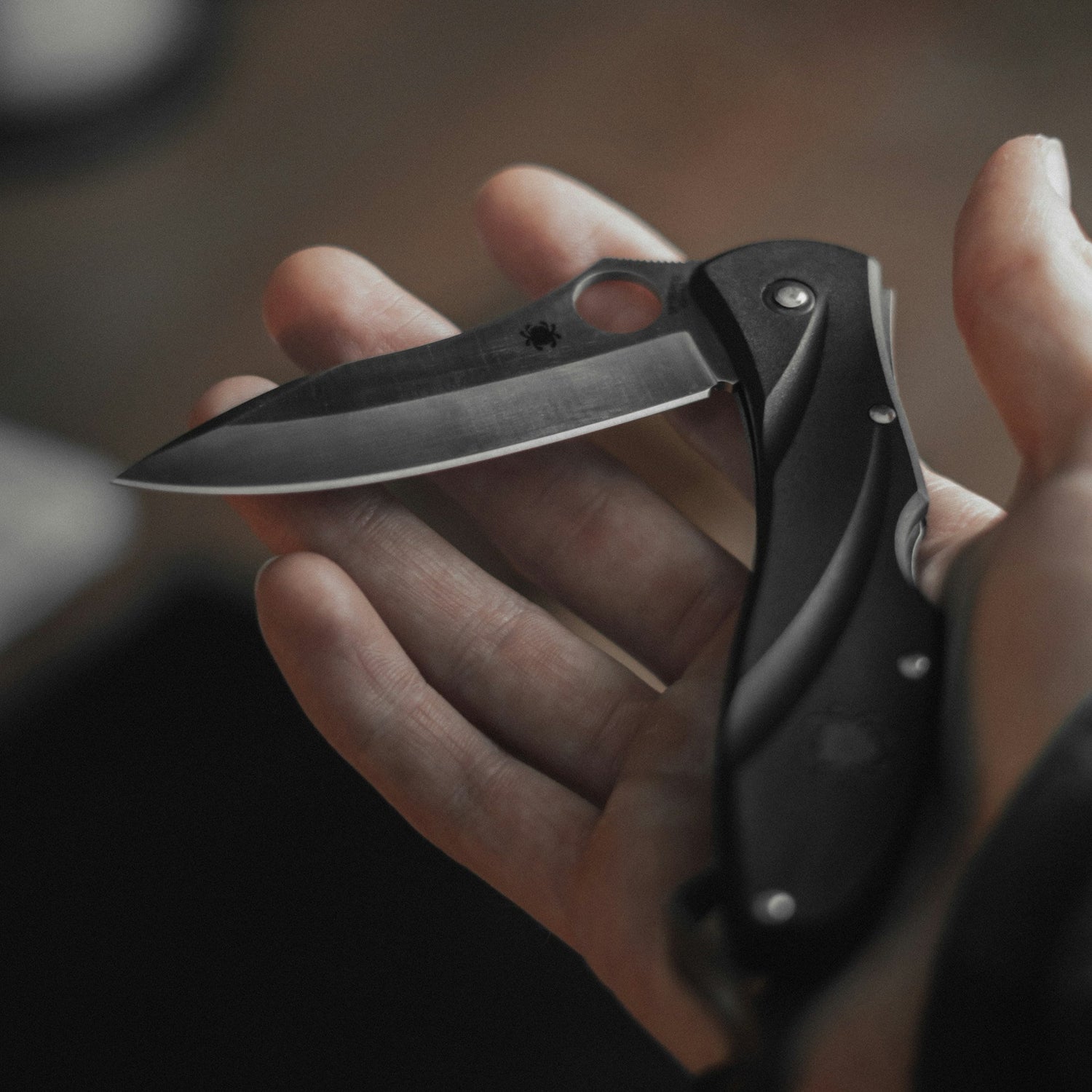
Do’s:
- Familiarize yourself with your knife’s design and function before regular use.
- Practice safe opening and closing techniques to avoid accidents.
- Grip the knife handle firmly; keep fingers away from the blade edge.
- Point the blade in a safe direction while using it.
- Clean and maintain the blade regularly to ensure smooth operation.
- A core part of pocket knife safety is to always use your knife only for its intended purposes, such as cutting tasks, field-dressing game, crafting tools, food preparation, etc.
- Store folding knives closed and fixed blades in a sheath when not in use.
Dont’s:
- Don’t use your knife for prying, twisting, or hammering tasks.
- Don’t force the blade if resistance occurs; adjust your approach.
- Never throw your knife—it’s not designed for that type of use.
- Avoid storing knives in places exposed to moisture or extreme temperatures.
Safety Tips

Do’s:
- Teach children that knives are tools, not toys. If you teach them how to use a pocket knife, be vigilant about supervision and instruction.
- Check the blade lock every time before use as part of pocket knife safety to ensure it’s functioning properly.
- Use a secure pocket clip when carrying knives to prevent accidental openings.
- Handle assisted-opening knives with extra caution.
- Keep knives in a safe, designated storage area when not in use.
- Sharpen the blade regularly to prevent slipping caused by dull edges.
Dont’s:
- Don’t try to disassemble your knife; it may damage the mechanics or void warranties.
- Don’t force a blade into its sheath if there is resistance; reposition it instead.
- Avoid carrying knives loosely in your pocket; use a clip or case for safety.
- Never use a faulty knife; stop using it immediately if the blade doesn't lock.
- Don't ignore regular cleaning and maintenance, as dirt buildup can lead to malfunctions.
Why Pocket Knife Safety Matters
A pocket knife is more than just a tool; it's a responsibility. Understanding how to handle a knife safely ensures it serves its purpose without causing harm.
At Palmetto Wood Shop, we offer high-quality folding knives designed with both functionality and safety in mind. Our selection of engraved pocket knives is ideal for unique gifts and emphasizes reliability and quality.
By learning how to use a pocket knife responsibly, you ensure a lifetime of safe and effective use. If you have any questions about how to use a folding knife, contact us now. Explore our collection to find customizable options that perfectly suit your needs.